Where Do I Market My Business in Kenya?
Check out the best online places to market a small business based in Kenya

Mumbi Wanjiku
Contributing Writer @ Quorage

The best places to market your business in Kenya online are Instagram, TikTok, Facebook, Google Maps, Jiji, and WhatsApp. Instagram is best for beauty products. TikTok is best for Gen Z buyers.
Many of these social media platforms allow you to advertise your business for free in Kenya. The trick is knowing how to market your business effectively on each platform.
This guide will show you where to market your small business in Nairobi and how to make the most out of each platform.
I will also answer the question, “Where do I market my business in Kenya to actually get sales?”
Let’s get started.
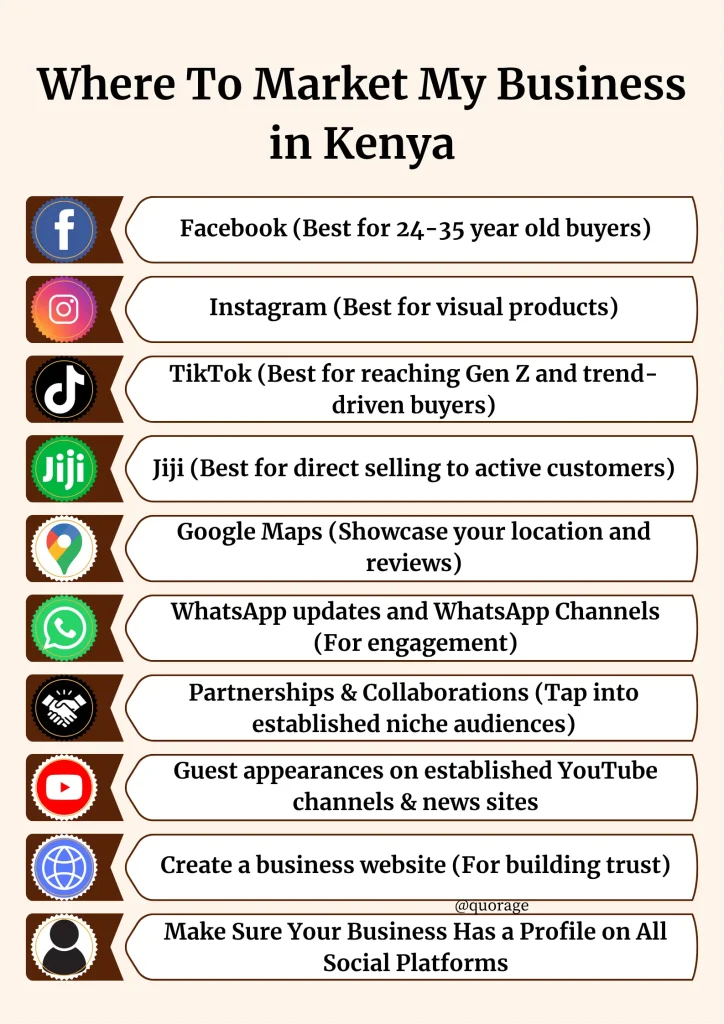
1. Facebook (Best for 24-35 year old buyers)
Beyond posting on your Facebook consistently, join groups in Nairobi like Kilimani Mums, and post your products there 3 to 4 times per week. Additionally, do Facebook live sessions twice a week, showcasing how to use your product. Finally, list your products on the Facebook Marketplace.
Facebook is one of Kenya’s most used social media platforms, with over 20 million active users. And 7.4 million of these monthly users are aged 24 to 35 years. So if most of your past buyers are between these age groups, Facebook is the best place to market your product.
Use Facebook groups to market your business in Kenya
To use Facebook Groups to market your business, join at least five active groups within your target market. Post during weekday evenings (5–9 pm) to avoid weekend clutter. Your posts should feature 5–10 high-quality, multi-angle photos alongside clear pricing and contact details. Additionally, respond to comments and DMs promptly.
The best Facebook groups to market your business in Kenya are active daily and have over 10,000 members. A few examples are:
- Kilimani mums market place with 23.7k members
- Nairobi marketplace with 10.1k members
- The-K Soko (Kenya Soko with 12.9k members
- 254 business online with 46.9k members
- Kenya business exchange with 100.9k members
The groups you join depend on your target market. To figure out your target market, look at your past buyers and people who interact with your posts on Facebook and Instagram.
Once you have figured out the groups to join based on your target market, read each group’s rules carefully before posting. Many of these groups require admin approval before posting or have specific posting times.
Post your products on weekday evenings (5-9 pm) rather than on weekends, as the feed tends to get too crowded. Use 5-10 high-quality photos taken from different angles, and include a detailed description of each product, pricing, and your contact information.
Finally, respond to comments and messages promptly. Kenyan buyers move fast and will buy from whoever responds first.
Use Facebook Live to showcase your product in real-time
Use your phone for Facebook Live; it is easier to use than a computer.
Start by setting up your recording space. It’s easier to do a Facebook Live on your phone app than on a computer.
You’ll need a phone stand for recording. If your room isn’t well-lit, you’ll also need a ring light or LED panel lights. (If you don’t have these gadgets, you can source them from websites like Jumia, Killimall, or in physical shops, especially around the Bus Station (BS) in Nairobi CBD).
Choose a few products to showcase in your FB live, depending on the duration of the live. Focus on best-sellers or the newest products in your store.
Announce your live session in advance to build anticipation (24 hrs in advance). Post a story on your Facebook page and also use your other social media platforms.
The best time to go live on Facebook is during peak hours (evenings and weekends). The best hours are 5 to 9 pm on weekday evenings and 9 to 11 am on weekends.
When doing your live, show one product at a time. Start with the best seller. Demonstrate how it works and answer customers’ questions from the comment section as they come. You may have to interrupt your demonstration to answer a question. And also look out for similar questions and answer them as one.
After the live, post the video on your page so people can watch later and reach out. Include how to contact you or order in the post.
List Products on Facebook Marketplace
Use Facebook Marketplace to reach local buyers who are actively searching for products near them. Create detailed listings with clear photos, honest descriptions, and keywords that match what customers are typing in the search bar.
Facebook Marketplace gives you access to local buyers actively searching for products near them.
Go to facebook.com/marketplace and click “Create New Listing.”
Use clear, well-lit photos (minimum 5 per listing) and include close-ups to show product condition. Write honest descriptions that include brand, condition, size, color, material, and any defects. Be very transparent to build trust with your customers.
Include keywords buyers actually search for (e.g., “iPhone 17 promax 8 GB RAM,100% battery in Nairobi”, not just “phone”). Keywords are the exact words that people type into the search bar.
To determine which keywords to use, go to Facebook Marketplace, type in the product you want to sell, and look for the keywords that pop up. These suggestions are the real things people are searching for. Additionally, look at a few top listings and see what common wording is in their titles. Lastly, think like your buyer (ask yourself: if I were a buyer looking for a bag, what would I type in the search bar and use those keywords to advertise your bag).
Lastly, add new listings weekly to keep your old listings visible. The Facebook algorithm prioritizes recent posts.
2. Instagram (Best for visual products)
The best way to market your business on Instagram in Kenya is to use Reels to showcase how to use your product. Additionally, use descriptive hashtags to reach people following those hashtags. Finally, respond to DMs and comments promptly.
Instagram is where visual products sell best. Fashion, beauty, home decor, food, and lifestyle brands dominate the platform.
First, you need to ensure that your Instagram bio provides:
- Your business name
- Exact location/address (e.g., Located in Nairobi CBD Sawa Mall Shop NO xxx”, not just “Located in Nairobi)
- Clear call to action (e.g., Shop Via WhatsApp Phone No: 07xxxxxxxx or DM to order).
- Payment method in your bio for ease of payment. For instance, you can put up your M-Pesa number, Till number, M-Pesa paybill, or bank paybill.
- Links to everything else. Use Linktree to list your products, other social media platforms, website, and everything else.
After optimizing your bio, proceed to use Instagram as demonstrated in the sections below.
Post Instagram reels showcasing your products in use
Use Instagram Reels to showcase your products in action, share behind-the-scenes moments, and promote offers in a short and engaging format. Reels help businesses reach a wider audience because the algorithm often shows them to people who don’t already follow your page, and many Kenyans spend time scrolling through them daily. Post during peak hours, include a clear call to action, and consider using scheduling tools to plan your content in advance.
Instagram reels are engaging, making it easier to showcase products, demonstrate services, or share quick tips in a visually appealing way. Additionally, IG reels can help businesses reach a wider audience because the algorithm often shows them to people who don’t already follow your page. Many Kenyans spend a lot of time scrolling through Reels daily, making it one of the best places to capture attention and advertise your products or services. Their short, engaging format also makes it easy to showcase products, demonstrate services, and attract potential customers.
You should create reels that showcase your products in action and clearly demonstrate how they work. Customers want to see how a product performs in real life, not just sitting on a shelf.
You can also showcase behind-the-scenes of your business. For example, show your process for preparing orders for delivery, packaging items, or restocking inventory. Give customers a glimpse into how things work to build trust and make your business feel more authentic and relatable.
Reels are also a powerful way to announce new stock, promote giveaways, or share limited-time discounts.
Keep it short, clear, visually appealing, and entertaining, and always include a strong call to action so viewers know exactly what to do next. Consider hiring a comedian or actor like Flaqo, Mammito, and Awinja. You can find upcoming actors at the Kenya National Theatre.
You should also post your reels during peak hours (5-7 PM) on weekdays and (8-11 Am) on weekends. Instagram business accounts also provide insights into when your specific followers are most active.
Posting manually almost every day can be exhausting. That is where social media scheduling tools come in. Use one to schedule posts in advance so you don’t have to post manually every day.
Further reading: A step-by-step guide on how to create an Instagram Reel from Scratch
Use Hashtags to increase the visibility of your post
Use Instagram hashtags to help potential customers discover your business and increase your chances of appearing on the Explore page or suggested content. Add hashtags in your caption, use them across different content types like images, Reels, and Stories, and choose a balanced number that clearly reflects your business, location, and niche. You can also create a saved list of commonly used hashtags so you don’t have to come up with new ones every time you post. And lastly, observe what successful competitors are using to improve your reach.
Hashtags help potential customers discover your business when searching for products. Hashtags act as bridges connecting your content to interested users. When you use them well, help your content get featured on the Explore page or in suggested Reels.
Include hashtags in your IG content by adding them directly to your caption. Add 2-3 hashtags in your caption, then add a few more at the bottom of the caption to boost visibility.
(E.g., New Balance 520 available in our CBD shop #Nairobistyle #mysneakersNairobi
#StreetStyleNairobi #KenyanBusiness #sneakersLovers)
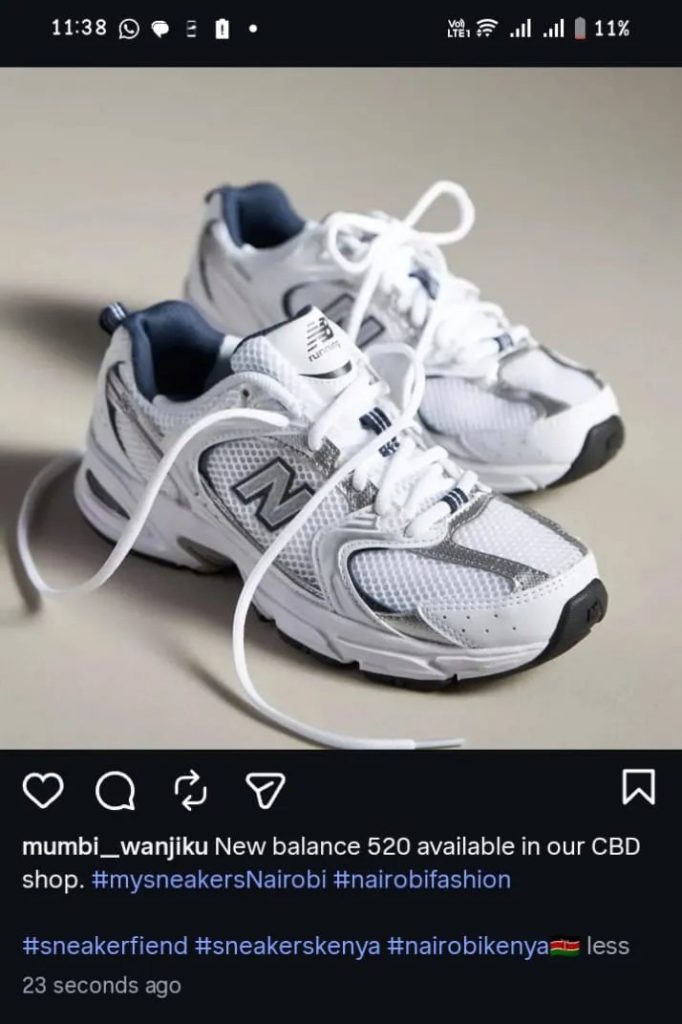
Additionally, use hashtags across all your content types, from static Images to IG Reels and Stories. Use 5 hashtags per post. As of early 2026, Instagram limited the number of hashtags you can use on a post to 5. Less is more; a few well-related hashtags to your content are better than too many that are only semi-related.
To make your work easier, create a saved list of your go-to hashtags. You can group them by content type (e.g., new arrivals, discounted prices, behind-the-scenes, Reels, and Stories) and quickly copy and paste what you need when you post.
Lastly, research what hashtags competitors and successful businesses are using and incorporate those strategies into your posts.
Read more: The best Instagram Hashtags for More Views, Likes, and Followers.
Respond to DMs promptly
Kenyans move fast on social media. The first business to respond often makes the sale.
Make sure your Instagram notification bar is turned on so you can see your DMs as they come in.
Also, use the Instagram Quick Replies feature to save time on common questions such as prices, location, and delivery.
If you can’t respond immediately, you can set up an auto-reply with a phone number to call. E.g. “Thank you for your message! Call us at 07XX-XXX-XXX to speak to us now.”
Additionally, respond to comments on your posts. This helps boost engagement.
If your DMs are a lot, you can hire a social media manager or train a staff member to handle the account on your behalf.
3. TikTok (Best for reaching Gen Z and trend-driven buyers)
To market your business on TikTok, create videos that hook within the first three seconds, jump on trending hashtags, post when Kenyans are online, show behind-the-scenes to prove you are real, and make sure you reply to posts, comments, and DMs quickly.
Ask a Kenyan under 30 where they found that viral product they just bought; chances are they saw it on TikTok. The platform isn’t all about dance anymore; it is a place where people discover products, watch reviews, and decide what to buy. Plus, some people search for products on TikTok because it gives good results.
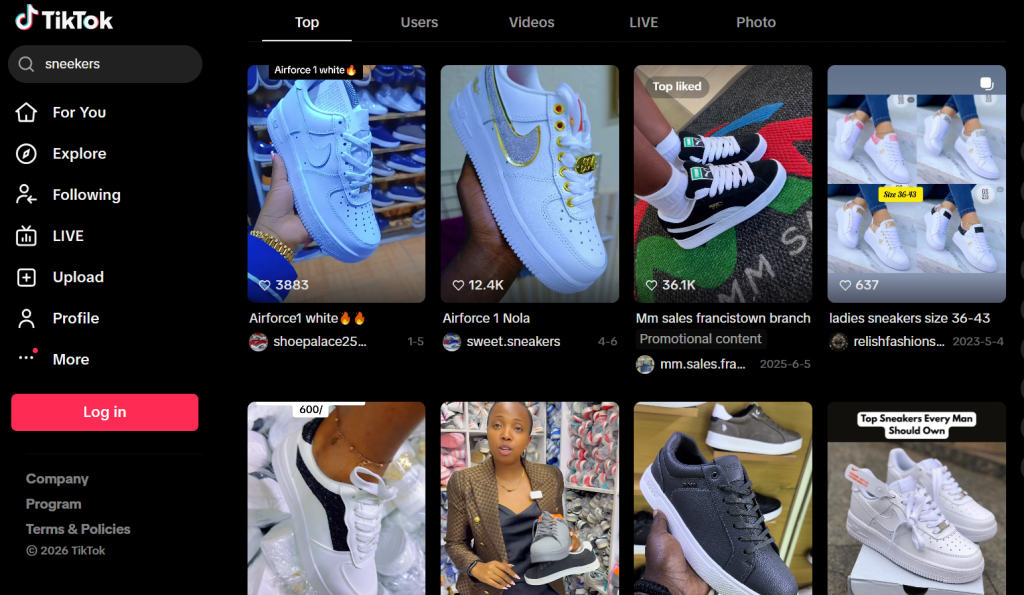
Businesses like Godrej Aer have run TikTok campaigns that have garnered over 10 million views and doubled their sales. Additionally, Killimall, an e-commerce platform, recorded over 152,000 purchases following TikTok ads. This is no luck; it is what happens when you meet clients where they are already scrolling.
If your product’s target market is young and ready to spend, TikTok is the best platform for you to get discovered.
But you’ll need to make it simple for people to buy by making sure:
- You put up your WhatsApp number or M-Pesa Till number on your bio
- Set a clear call to action on every video like “DM to order” or “Reach out on ur whatsApp number 07xxxxxxxx for enquiries.”
- When someone DMs, reply with: your payment details, exact price, and delivery timeline
In the sections below, I share more details on how to market your business on TikTok in Kenya.
Create Videos that Hook
To create TikTok videos that hook, start with a bold visual, a surprising statement, or a direct question in the first three seconds. Then make sure your video is no longer than 15-30 seconds. This respects data cost, as most Kenyans watch on their phones.
For the video content, show the product being used and not just sitting on a shelf. For example, film someone packing that bag you want to sell, using that blender, or wearing and styling that wig.
Add text overlays (subtitles placed over video or notes over images). This allows users to grasp messages immediately, even when watching without sound.
Lastly, end with a clear call to action (e.g. DM to order or WhatsApp 07xxxxxxxx with a screenshot of your preferred item).
Jump on Trending Sounds and Hashtags
Check TikTok’s Discover page daily to spot trending sounds and jump on trends quickly, as most only last a few days. Moreover, use popular Kenyan music or sounds because the algorithm favors trending audio. Finally, add at least 5 targeted hashtags that reflect your business, location, and niche, and avoid overly broad, overly competitive hashtags.
Check TikTok’s “Discover” page daily to be in the know on what’s trending in Kenya. Note the sounds used in the trending videos. Jump on trends fast, because most last only 3-7 business days before they’re old news. Use trending music, whether it is gengetone or a dancehall track that Kenyans are already engaging with. TikTok algorithm rewards users who use trending sounds.
Then add at least 5 hashtags per video. Make sure your hashtags showcase your business, location, and niche. For example:
- Business hashtags: #MadeInKenya #Small business,# Nairobi shops
- Location hashtags: #Nairobi #254
- Niche hashtags: #ThriftedKenya #NairobiFoodie
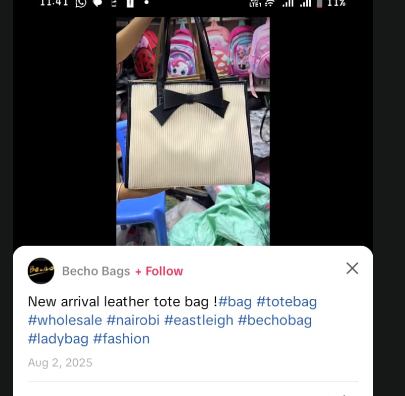
You should avoid generic hashtags like #business or #foodie. They are too competitive, and your video may not reach Kenyan customers.
Post when Kenyans are Online on TikTok
Post between 7-10 PM on weekdays, this is when Kenyans are unwinding from their busy days. On weekends, post between 9-11 AM when people are at home with Wi-Fi.
Post at least 3-5 times a day. Consistency is everything!
Make your work easier by filming multiple videos in one sitting and posting them throughout the week. This makes it easier for you to be consistent with posting.
Use TikTok analytics to show you when your followers are most active and post during that time.
Reply to Every Comment and DM within the Hour
After posting your video on TikTok, stay online for the first hour to reply to every comment and DMs as they come. Replying quickly builds on engagement, which makes TikTok recommend your video to more people.
Respond to every comment within the first hour. This shows TikTok that your content is worth showing to more people. Answer questions about pricing and availability in your comment section. This will help other viewers, too.
Use TikTok’s “reply with video” feature for common questions. This turns a question into more content. Once clients reach out about buying, respond promptly because Kenyans tend to buy from whoever replies first.
An example of a business that has used the “reply with video” feature.
@shiquo4 Replying to @Joy Nthenya ♬ original sound – SHIQUO || +254 747 900 900
If you are getting too many comments on each video, it might be time to hire someone to manage your TikTok for you. You can’t do it all alone and also run your business successfully.
Show behind the scenes to prove you are real
To show behind the scenes, post videos of you packing and shipping orders. People want to feel involved in your process. Go live to showcase your products in real time and answer customers’ questions. Tag your location in every video to show your clients you have a physical presence. Additionally, share customer testimonials to build trust.
Kenyans have been scammed one too many times on this platform. Transparency equals sales.
When people see your face, it builds more trust in a market full of scammers and fake accounts.
4. Jiji (Best for direct selling to active customers)
The best way to market on Jiji is to take clear images of your products to build trust with customers, update your pictures regularly, boost your products to rank higher, and reply promptly to customers so you don’t lose them. Most importantly, encourage reviews/testimonials from each buyer to build credibility.
Selling on Jiji is like opening a small shop only online. Many Kenyans frequent Jiji to find products and check prices. Your job is to make sure your products are easy to see, understand, and buy from.
Here is how you market your business on Jiji correctly.
Start by creating your account. The process is pretty simple!
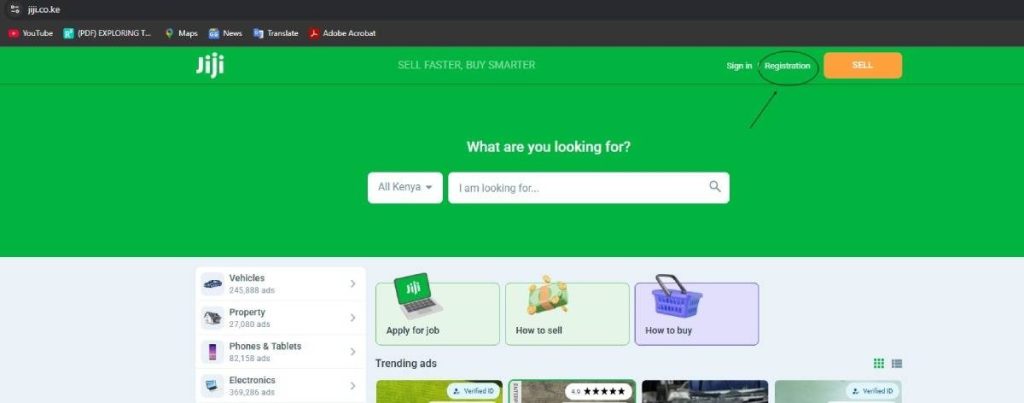
- Go on www.Jiji.co.ke. On your far right, there is a registration button; click on that button.
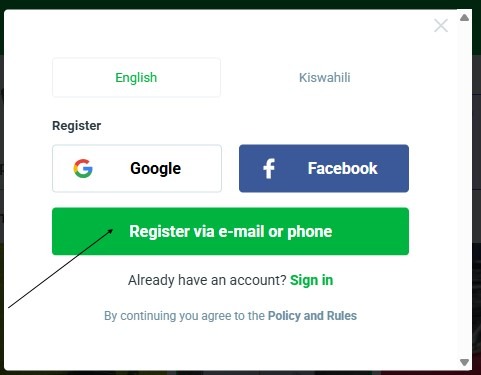
- Choose a language you are comfortable using (the options are Swahili or English). Then click on the button (Register via email or phone)
- Add an email address (Preferably your business email), create a strong password that you can easily remember, add your first and last name, tick the checkbox that asks you to agree with the rules, then register, and just like that, you have an account.
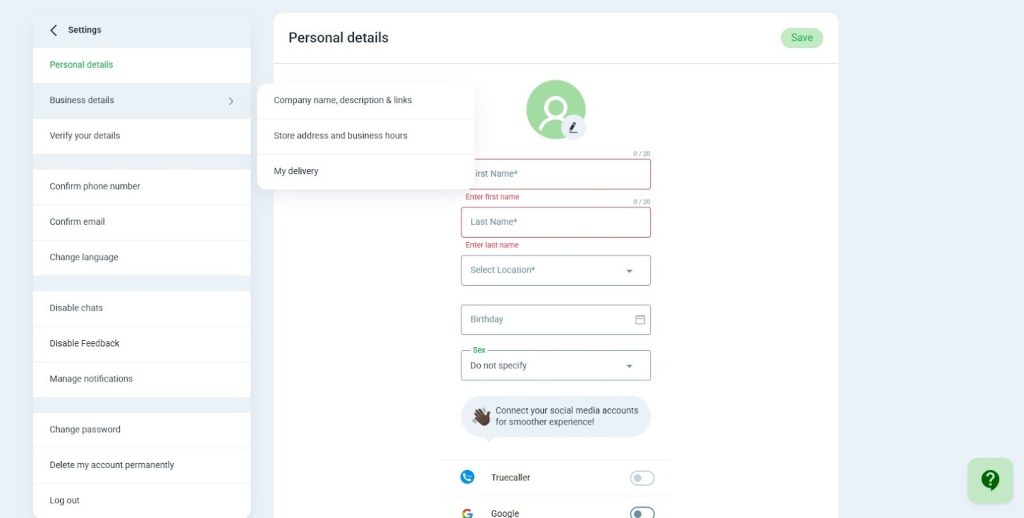
The next step is to set up your account.
- Use your real business name
- Add a clear logo or profile picture
- Add your store address and business hours
- Lastly, add a short description of what you sell, and include any links and contact information so clients can easily reach you.
Now that your account is set up, take clear photos and create ads for each product. More on these below.
Upload Clear Images of your products
Use clear images in your ads on Jiji. Accompany your images with clear titles and keywords. In addition, for better results, update your listings regularly so people know your business is active.
Your pictures do all the talking on Jiji. Pick five of your best-selling products, take bright, clear images, and include pictures from different angles so clients can see the full product.
For example, if you are selling handbags, take images that clearly show the front, back, inside, zip, and straps. And if you’re selling a service, take before-and-after images.
Also, update your listings regularly. Don’t go for months without updating your page; it looks abandoned. Remove sold items and refresh posts so clients can know yours is an active business.
Additionally, accompany your images with simple and clear titles. Use keywords you know people search for so your clients can easily find you. (E.g., Black leather office handbag Nairobi)
Lastly, in the description section, answer as many questions as you can before they are even asked. For instance, let the client know what the bag is made of, its size, price, if delivery is available, and where they can pick it up. This will build more trust in your product.
Jiji has the option of paying them to make your product appear higher in search results and reach more people. Think of this process as moving your product from the back of the market to the front, where everyone can see it. This is boosting your post.
Boost your Posts (Use Ads)
When deciding on what to boost, start with your best-selling products so you can get your money’s worth. Review the traffic, sales, and messages you receive after boosting and decide whether the investment is worth it. After boosting your post the first time, renew it monthly (click renew) to reboost the post without paying again.
When clients reach out, answer messages promptly to avoid losing the customer to another business.
Move serious enquiries to WhatsApp quickly to close faster. Here, you can share more videos or photos and politely ask satisfied buyers for reviews to strengthen your profile.
Lastly, share your Jiji link across all your other social media platforms so your customers know they can reach you here as well.
5. Google Maps (Best for showcasing your business address and reviews on Google Search)
The best way to use Google Maps to market your business online is to add accurate business details, such as your business name, location, opening hours, and contact information, so people can find your business with ease. Keep posting photos that showcase your business and products to improve visibility. Additionally, use the provided tools, such as the “Posts” feature and the “Performance” tab, to get the best results.
Using Google Maps (also known as Google Business Profile) helps your business become more visible to customers searching online, especially those nearby and ready to buy. It also builds trust by displaying important details such as your location, hours, photos, and reviews directly on Google’s platform.
Here is how to make Google Maps work for your business!
For customers to find and trust your business, you need to fully complete and verify your business profile first. If you need help creating and verifying your profile, follow this link for a step-by-step guide.
Add accurate business details for easy access
Start by adding accurate business information such as business name, address, and opening and closing hours. Also, add your contact information (include a number people can reach you at for enquiries) or a WhatsApp link for those who would prefer to purchase from your business online.
Additionally, include an address for your physical shop. When setting up or editing your profile, Google Maps lets you pin your location. Make sure you pin the exact entrance to your door, not just your building or street.
In your business description, add landmark-based directions (e.g., the shop is located in Iconic Plaza, Moi Avenue, between Sawa Mall and Sasa Mall, on the Fourth floor, shop number D6). Also, add photos of your storefront so customers can recognize it upon arrival.
Finally, link to your other social profiles and website inside your Google Maps profile.
Upload photos regularly for visibility
Upload new photos weekly to keep your profile fresh, active, and well-maintained. The photos should be at least 1200×900 px. Don’t use blurry or dark photos. When taking photos with your smartphone, make sure to turn on Location Tags. It will embed location data in the photo that Google can read and may use for rankings.
Additionally, use descriptive image file names for your images before uploading to Maps. For example, if it’s an image of a bag, you can save it as “brown-leather-bag-nairobi.jpg”. You want to include the product name and location in the file name.
New photos showcasing your products and services give potential customers a feel for your business before they arrive. Moreover, profiles with regularly updated images rank higher in search results. This makes it easier for new customers to find you and increases the likelihood they will choose your business over your competitors.
Add pictures of your storefront, your staff, the products you offer, events, promotional photos, and even behind-the-scenes. Showcase as much as you can.
Use Google Maps tools to promote and track your business
Use Google Maps Posts to share offers, product updates, and promotions directly on your business profile so customers see them when they search for you. In addition, track results using the Performance tab to see searches, calls, and visits, and adjust your strategy based on what gets the most engagement. Also, consistently request and respond to reviews to build trust and increase visibility. When used well, Google Maps becomes free advertising to buyers already looking for what you sell.
Google Maps offers a few features that help you advertise your business for free, for instance, the “Post” feature. This is a feature that Google Maps introduced, where you can share your products and services, highlighting upcoming events, sharing discounts, or promotions. Each post appears directly on your business profile so customers can see updates as soon as they search for your shop. For this section, make sure you include clear images, a concise caption, and a clear call to action, for instance, “Visit our shop today.”
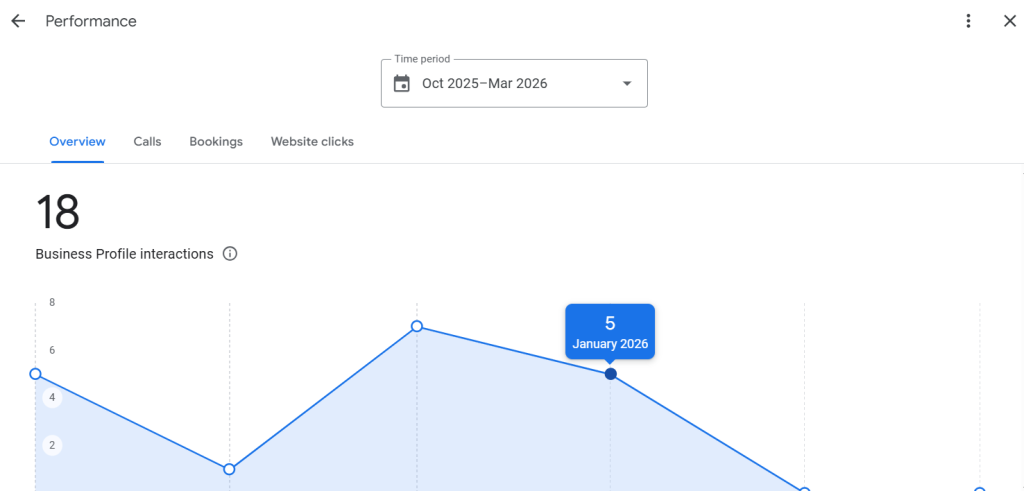
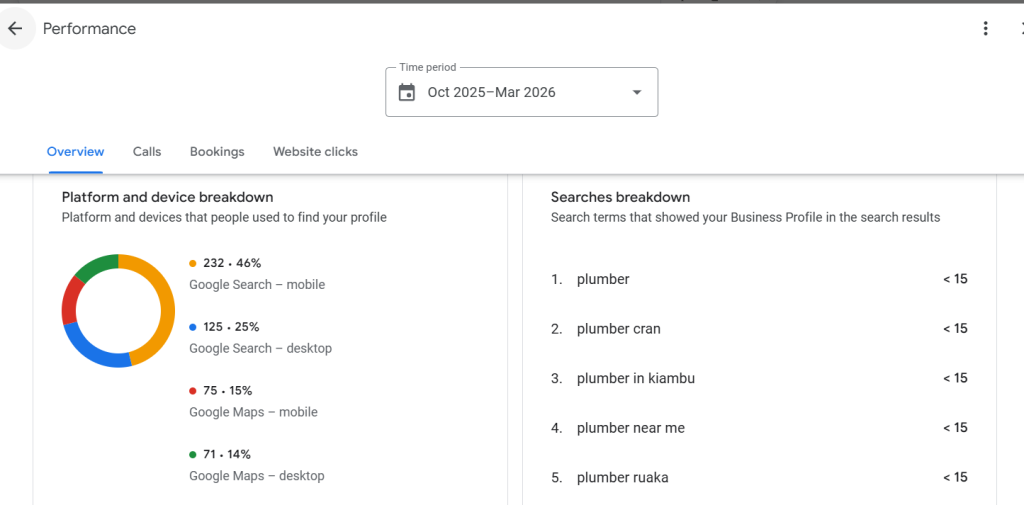
Additionally, the “Performance tab” helps you understand and track how the profile is performing. This tab will show you how many people searched for your business, how many requests to visit, and how many clicked to call or visit your website. These metrics help you see which posts or promotions are receiving the most engagement, and this can help you be smarter about future posts and marketing strategies.
Finally, actively request reviews from customers. Regular reviews will build trust and increase visibility. You can send them a review link after purchase, and make sure you reply to every review, good or bad, within 24 hours to showcase professionalism and work on improving what your customers did not like
When updated and optimized consistently, Google Maps functions as free advertising, targeting buyers already searching for what you sell.
6. WhatsApp updates and WhatsApp Channels (For engagement)
Use WhatsApp updates for relationship-building through daily posting and WhatsApp channels for structured selling to a large audience. Use WhatsApp Business tools to simplify buying and promote your Channel externally.
With intentional use of WhatsApp updates, also commonly known as WhatsApp status, and WhatsApp Channels can turn casual buyers into repeat customers.
For better results, start by separating the two: status updates are for daily updates about new products or before-and-after service images. Additionally, post about customer testimonials, new arrivals, or restocks.
Channels should be used for structured broadcasting to a larger audience, such as mini-news platforms. Create a Channel named after your shop and share things like early-bird discounts, bundle deals, or exclusive offers. Additionally, use Channels to post educational stuff about your industry. For example, if you’re selling bags, you can post about how to spot a fake leather bag, how to maintain leather bags, etc. WhatsApp Channels should make customers feel like insiders.
Promote your Channel on other social platforms. You can post the link on Instagram bio, Facebook, Jiji, or in in-store posters. Additionally, you can promote your Channel link in other WhatsApp Channels, such as meme channels with a large following.
Your post should be valuable, include high-quality images, have short captions, and provide clear contact instructions. For Channel posts, they don’t all need to be sales and marketing posts.
Finally, let WhatsApp tools work for you. You can set up automated greetings and quick replies for FAQs (payment methods, delivery areas, pricing).
WhatsApp Business lets you create product catalogs with up-to-date stock. (Clients can browse without asking for what you have.
The goal is to reduce response time, stay visible daily without being overwhelmed, and make buying easy.
7. Partnerships and collaborations with influencers (Tap into established niche audiences)
Market your business in Kenya by using micro-influencers (Influencers with 5,000-50,000 followers on IG and TikTok) who reach your target audience. Also, create partnerships and collaborations with complementary businesses to cross-promote each other.
For a business owner in Nairobi looking to market their business online, influencer collaborations bring fast visibility because the influencers already have a loyal following.
Partner with micro-influencers
Start with micro-influencers (influencers with 5000-50,000 followers) on Instagram or TikTok. Make sure you are marketing your products with influencers whose audiences match your buyers. For instance, if you own a handbag business that primarily caters to Gen Z, make sure you collaborate with an influencer whose audience is largely Gen Z (like a meme page). This ensures your brand reaches people who are most likely to connect with your style, engage with your content, and ultimately make a purchase.
Do not just look at the follower count; also look at engagement (comments, saves, shares) and make sure their followers are Kenyan.
Instead of paying for a few random posts, propose a structured collaboration (e.g., you can give them your product to use for real, create a styling video showing how to pair your product, or film an in-store visit). Provide a unique discount code for the influencer’s clients that will help track sales.
Finally, agree on deliverables upfront (e.g., the number of posts you expect from the influencer, the platform you would like them to advertise your business on (if they have multiple platforms), the number of stories and videos, and how long the content should stay up).
Read more: How to find influencers on Instagram
Partner with complementary businesses
For example, Mumbi owns a shoe shop, and Pauline owns a dress boutique. Mumbi and Pauine can collaborate and cross-promote each other on social media, offer joint discounts (e.g., buy a dress and get 10% off matching shoes), or bundle products for giveaways. Mumbi gets access to Pauline’s customers, and Pauline gets access to Mumbi’s. This instantly exposes both brands to new, relevant audiences without paying for ads.
After every collaboration, measure results, check inquiries, follower growth, and actual sales. Work with partners that help your business grow.
8. Guest appearances on established YouTube channels & news sites
A business owner in Nairobi can gain credibility and attract new customers by appearing as a guest on established YouTube channels that cater to their target market. Additionally, approach platforms like Tuko or blogs that feature local entrepreneurs.
Start by identifying Youtube Channels that already speak to your target market. Examples of YouTube creators who showcase businesses are:
- Celestine Ndinda, who has 147k subscribers
- ManTalk ke with 54.5k subscribers,
- Financially Incorrect with 76.4k subscribers.
Reach out professionally through email or DM a short pitch. The pitch should be about who you are, your shop, and what you deal with, what makes your shop unique, and what value their audience will gain.
Offer a clear vision for your content, such as behind-the-scenes, a styling session, or a product demo.
For online publications, approach platforms like Tuko.Co.ke, Kenya Times, Nation Media, or Citizen TV or niche blogs that showcase local entrepreneurs.
Share your business story, how it started, how it’s going, the challenges you have overcome, and what makes your business unique. Journalists love compelling stories, not ads.
Before the feature goes live, make sure your business’s social media platforms are active and your Google Business Profile (aka Google Maps) is up to date.
Maximize the traffic you will receive from this feature, you can offer a discount for new viewers. Then repost the feature across all platforms for credibility.
9. Create a business website (For building trust)
Every business needs a website. Create one using WordPress or Wix at the beginning, choose a custom domain that matches your business name, add payment options for your products, and create the homepage and about page that describe your business.
A website is your business’s home on the internet. Here, your clients can read your story, learn about your products, see prices, and contact you. It gives your business a professional look and builds more trust with your clients.
Websites are not for big business only; create one for your business even if you operate from a small physical space.
You’ll need to pay yearly for your custom domain, i.e., yourbusinessname.co.ke or yourbusinessname.com. You can buy the domain from Squarespace or any hosting provider like Cloudways.
You’ll also need to pay yearly for hosting. Cloudways is very safe and a bit expensive at US$10 per month. But you can also use shared hosting like Hostpinnacle at KES 5,000 per year. That done, you’ll need a website designer to create the layout of your website. They charge around KES 40k to KES 100k depending on the number of pages being designed. And you’ll also need a website developer to build the website. They charge from KES 80k to 250K depending on the complexity of the website.
After developing your website, you’ll need a writer who’s experienced in SEO to write your homepage, about, product pages, blog posts and everything else.
Your website should include essential pages. For example:
- A homepage that explains what your business is all about: what you sell and who it is for?
- Product or service pages to show each product or service description and their prices.
- An about page that tells your business story and contact details (Phone number, WhatsApp, and location map).
- An FAQ page to answer the most common questions including prices, location, delivery options, and how to order. This will help filter casual inquiries from serious buyers and save you a lot of time.
Every page should guide your visitors towards an action E.g. “Order now” on your product and service page or “contact us on WhatsApp for more enquiries” on your contact detail page.
Additionally, make payments easy by integrating M-Pesa, card payments, or simple checkout options to complete a purchase.
Add a clickable WhatsApp button and embed your Google Maps location for directions to the shop.
You can also install an analytics tool to track visitors and see which pages attract the most interest. Also, make sure your website is connected to all your social media platforms so your customers can easily find you.
Most importantly, keep your website up to date. When done right, your website will be your most reliable salesperson.
10. Make Sure Your Business Has a Profile on All Social Platforms
Even if you don’t post daily, having accounts on all platforms ensures customers can find you wherever they search for you or what you sell.
You need to be on all these platforms:
- Facebook (largest Kenyan audience)
- Instagram (visual products: fashion, food, beauty)
- TikTok (young audience, viral potential)
- X/Twitter (customer service, trending topics)
- LinkedIn (best for B2B services, post your thoughts on various topics in your industry)
- YouTube (how-to videos, product demos)
To manage multiple platforms with ease, you can:
- Use the same username across all platforms (e.g., @” TheScentedNookKE” across all platforms
- Use the same profile photo and bio for all your platforms
- Link all your platforms to each other
- Post the same content across different platforms (you can repurpose your TikTok videos for Instagram Reel or Facebook)
- Use scheduling tools to help with content creation, engagement, reporting, and collaborations
- Have the same shop address everywhere
- Have the same phone number everywhere
Be responsive and deliver on your promises
All the marketing in the world won’t save you if your customer service is terrible. Good customer service will push them to actually pay for the product or service. And keep coming back. And refer you to their friends.
So, organize a way to pick calls and respond to comments, DMs, and emails promptly. It’s best to hire someone dedicated to responding so that no person who makes contact is ignored. An assistant, social media manager, or digital marketing manager will do.
Another thing, it’s unfortunate that many businesses have normalized lying to customers. Your online photos should match exactly what the product looks like in real life. Your product or service descriptions should match exactly what the buyer gets once they pay. Honesty and transparency are very important.
Over to you
Now you know where to market your business online in Kenya and how to make each platform work for you.
TikTok is for going viral, Facebook for reach, Instagram for visuals, Jiji for its ready buyers, Google Maps for location, WhatsApp for closing sales, and Partnerships for trust.
Don’t try all of them at the same time. Start with three platforms where your target audience already spends time, respond quickly, deliver on what you promise, track what drives actual sales, and scale what works.
Good luck on your journey marketing your business online!
Let me know your thoughts in the comment section below.

One comment on “Where Do I Market My Business in Kenya?”
Amazing job I love how how you explained everything so clearly—very easy to understand.